
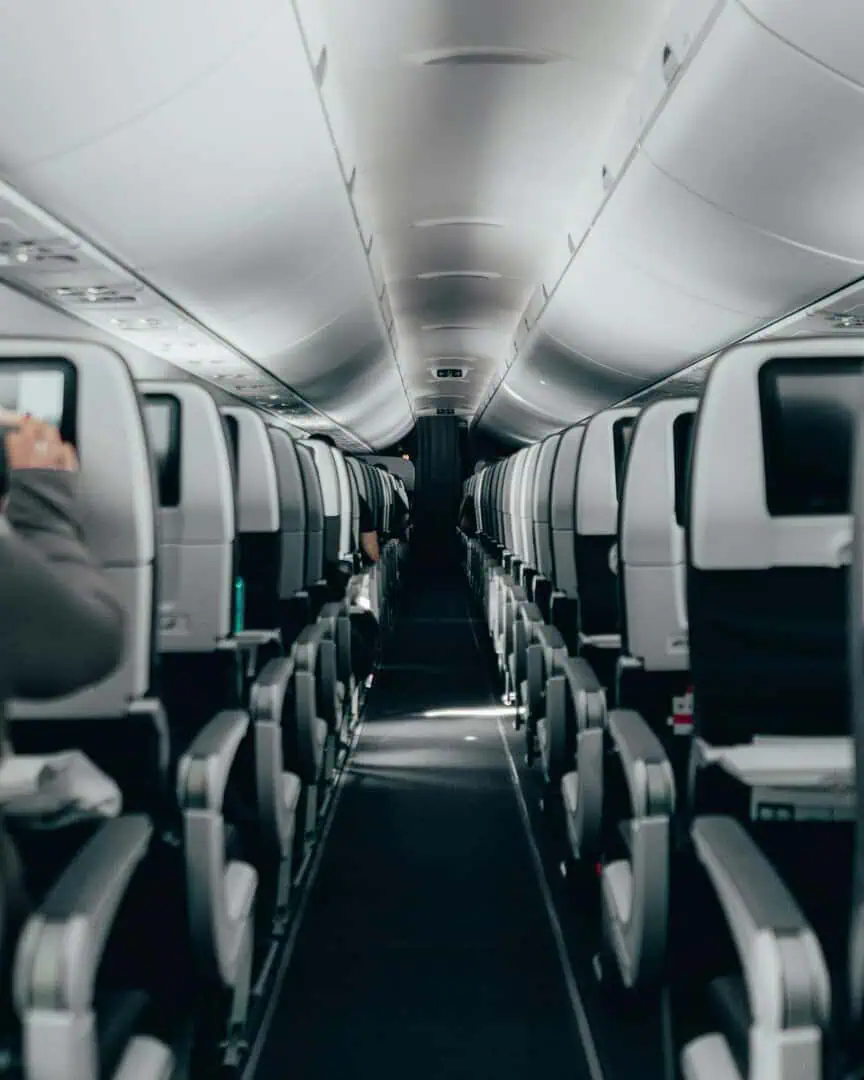
Business Class Sydney to Los Angeles - Flat Beds Eastbound
The Pacific run has a trick in it: you land in Los Angeles before you left Sydney, and then have to be a person for the rest of that day. That is what the flat bed is really buying here, and it is why the eastbound leg is the one to spend on.
Full price in AUD with baggage and meals included | Reply within 2 business hours | No obligation
Airlines we book on this route
We quote every full-service option and tell you honestly which is the best value for your dates. We do not publish fares because they change daily and the sharpest prices are unpublished wholesale fares. Ask us for today's best price.
| Airline | Typical routing | Good to know |
|---|---|---|
| Qantas | Non-stop | The Australian option, with the upper-deck business cabin on the A380 and the deepest lounge presence at both ends. The default for anyone in the Qantas ecosystem. |
| United Airlines | Non-stop | Flat beds with direct aisle access and a very large onward network from Los Angeles. Strong choice if the trip continues into the United States. |
| Delta Air Lines | Non-stop | Business suites with a door and a consistently well-regarded hard product. Worth pricing against Qantas every time. |
| American Airlines | Non-stop | Reverse-herringbone flat beds and a broad domestic connection bank at Los Angeles. Often competitive on the wholesale channel. |
| Air New Zealand | Via Auckland | The civilised split. Two shorter sectors, a genuinely pleasant hub, and a way to break a long trip that often prices well. |
You land before you took off, and then the day starts
Cross the international date line eastbound and you get a day back. A flight that leaves Sydney in the morning arrives in Los Angeles in the morning of the same date, which sounds like a gift and is actually the single hardest thing about this route.
Because the day then happens. All of it. You have flown thirteen and a half hours, your body thinks it is the middle of the night, and Los Angeles wants you to collect a hire car, check into a hotel that is not ready and stay upright until a plausible bedtime. Get that day wrong and you spend three of your holiday's days recovering from it.
That is what the flat bed is buying on this route, and it is why the recommendation here is unusually specific. Get a Los Angeles quote.
Eastbound and westbound are not the same flight
Treat them separately, because the aircraft is the only thing they have in common.
Sydney to Los Angeles is the daytime crossing that arrives into a day you have to live through. The jet stream is behind you, so it is the shorter of the two, often around thirteen and a half hours. Sleep on this sector is not a luxury, it is the entire strategy: the passengers who arrive functional are the ones who slept for six hours over the Pacific and then walked into California pretending it was morning, because it was.
Los Angeles to Sydney is the overnight, and it is longer, often close to fifteen hours into the headwind. But it lands you at home, in the morning, with your own bed a taxi away. A bad night on this leg costs you a groggy Tuesday, not a ruined holiday.
Hence the rule we give clients who have to choose: buy the bed going over. Business class eastbound, premium economy or economy home. It is the opposite of the advice we give on the Sydney to Bangkok route, where the overnight is the homeward leg, and it is a good illustration of why "always book business on the overnight" is too crude a rule to be useful. The right question is never which leg is the overnight; it is which leg has a day waiting at the end of it.
What your boarding pass does not do at LAX
This is the part nobody selling you a premium fare will mention.
US border processing is a federal operation. It is not run by your airline, it does not care what you paid, and the queue in that hall is the queue. Some carriers offer priority lanes at Los Angeles, and they help when they are open, but the reliable fixes are the ones you arrange yourself: Global Entry if you travel to the States regularly enough to justify it, or the mobile app options that let you submit your details before you land.
We tell every client this, because the gap between expectation and reality at that particular airport is where the good mood from a fourteen-hour flat bed goes to die. The cabin buys you a rested body for the queue. It does not buy you a shorter queue.
The connection everyone underestimates
If Los Angeles is not your final stop, read this twice.
An international arrival at LAX means clearing immigration, collecting your checked bags, clearing customs, re-checking those bags, and then getting yourself to a domestic terminal, which at that airport can involve going outside and travelling between buildings. It is not a corridor. It is a small expedition, performed while jet-lagged, and it routinely takes far longer than the connection times a booking site will happily sell you.
Three hours is comfortable. Two is tight. Less than two is a wager on a day when you are least equipped to win it.
Two things fix it, and we build both as a matter of course. First, generous connections rather than legal minimums. Second, ticketing the domestic leg on the same ticket as the international one wherever the fares allow, so a delayed arrival becomes the airline's problem and the bags are their responsibility rather than yours. Booked separately, a late inbound means a forfeited domestic ticket and an argument at a counter. This is the least glamorous advice on this page and the most valuable.
Auckland, and the case for breaking it up
Air New Zealand via Auckland splits the Pacific into two sittings with a calm, quick, genuinely pleasant hub in the middle, and it is a better idea than it gets credit for.
Thirteen and a half hours in one go suits people who can sleep on aircraft. If you are not one of those people, no seat design will fix it, and two shorter flights with a shower and a walk between them will produce a better version of you at the far end than one long one ever could. The fare is frequently competitive too, because a routing that adds a stop to a route with plenty of non-stops has to earn its passengers somehow.
Ask for it in the quote form and we will price it alongside the non-stops so the trade is visible.
Where the wholesale fare comes from
Airlines protect the price on their own website and release premium seats quietly through agent channels, because a visible discount devalues the cabin and an invisible one fills it. On a fare the size of a trans-Pacific business ticket, that gap is worth real money rather than a rounding error.
Three mechanics do the work here. Allocation fares we hold sit below the airline site for the same seat on the same aircraft. Companion pricing on two or more premium seats surfaces rates a single-seat search cannot reach. And mixed-cabin construction, business one way and a cheaper cabin the other, is exactly the shape this route wants and exactly the shape booking engines build worst.
Points deserve a mention too, because this is one of the corridors where they are genuinely competitive. Award space in premium cabins is scarce at peak, but an upgrade from the right paid fare class can be excellent value, and the calculation is not obvious. Give us your programme and balance and we will tell you honestly when points beat paying, including when they do not.
The calendar, and the cabin
Late April to early June and September to mid-November are the value windows, when the fare is at its friendliest and Los Angeles is at its most pleasant. Australian school holidays, the American summer and the fortnight either side of Christmas are the expensive weeks, and premium cabins in December go early and stay expensive. If your dates are fixed in one of those windows, four to five months of lead time is not caution, it is the difference between a wholesale fare and a published one.
On the cabin itself, our position is the same one we take in the is business class worth it guide: it is about what waits at the other end, not about the hours. Thirteen and a half hours followed by a full working day is one of the strongest cases in the network. Fifteen hours followed by your own bed is one of the weakest. Buy accordingly, and for companies flying this corridor regularly, our corporate travel service applies the same logic across a whole travel policy without account fees.
Send the quote form your dates, party size and whether Los Angeles is the destination or a doorway into the United States, and a consultant will reply within 2 business hours with wholesale fares in Australian dollars, including the split-cabin construction, so you can judge the value rather than take our word for it.