
Bangkok Travel Guide - Where to Stay and How to Get Around
Bangkok is the great connector of Australian travel, a destination, a stopover and a gateway all at once, and a city that rewards a little strategy enormously. Here is how consultants who send people there weekly would plan their own trip.
The one decision that shapes your whole trip: where to sleep
Bangkok is vast, its traffic is world-famous, and no single neighbourhood does everything, so the hotel decision quietly decides your holiday. The honest matrix:
- Riverside for romance and first impressions: the grand hotels line the Chao Phraya, the ferries replace traffic, and Wat Arun glows across the water at dinner. The trade-off is distance from the train lines for everything inland.
- Sukhumvit (Asok to Thonglor) for food, nightlife and connectivity: the BTS Skytrain overhead, the city's best restaurant scene at street level and rooftop bars in every direction. Less "classic Bangkok", more the city as it actually lives.
- Siam and Ratchaprasong for shoppers and families: the mega-malls cluster here with the aquarium and cinemas for hot afternoons, and the BTS interchange puts the whole city in reach.
- Rattanakosin (the old city) for temple-first travellers: walking distance to the Grand Palace and Wat Pho, atmospheric lanes, and thinner transport links that reward river boats and patience.
- Skip staying on Khao San Road unless the backpacker theatre is the point; visit for an evening instead.
Compare rates across these areas early, because riverside and Sukhumvit price differently by season: compare Bangkok hotels by neighbourhood before locking anything.
Moving around a city built on water and rails
The order of sanity: BTS Skytrain and MRT metro first, cool and immune to traffic; the Chao Phraya express boats and cross-river ferries second, which turn commuting into sightseeing; app-booked cars third for the gaps; metered taxis fourth, insisting on the meter; and tuk-tuks strictly as an experience rather than transport, price agreed first, never accepting a driver's suggested "special tour". The canal boats along Saen Saep are the local's shortcut east to west, brilliant once you have watched one boarding happen. Flights follow the same logic of small strategic choices compounding, which is why a proper fare quote beats a search engine's first answer on this route. Walking works within districts and fails between them; group each day geographically, exactly as you would in Delhi or Tokyo, and let the trains stitch the day together.
The sights worth your mornings
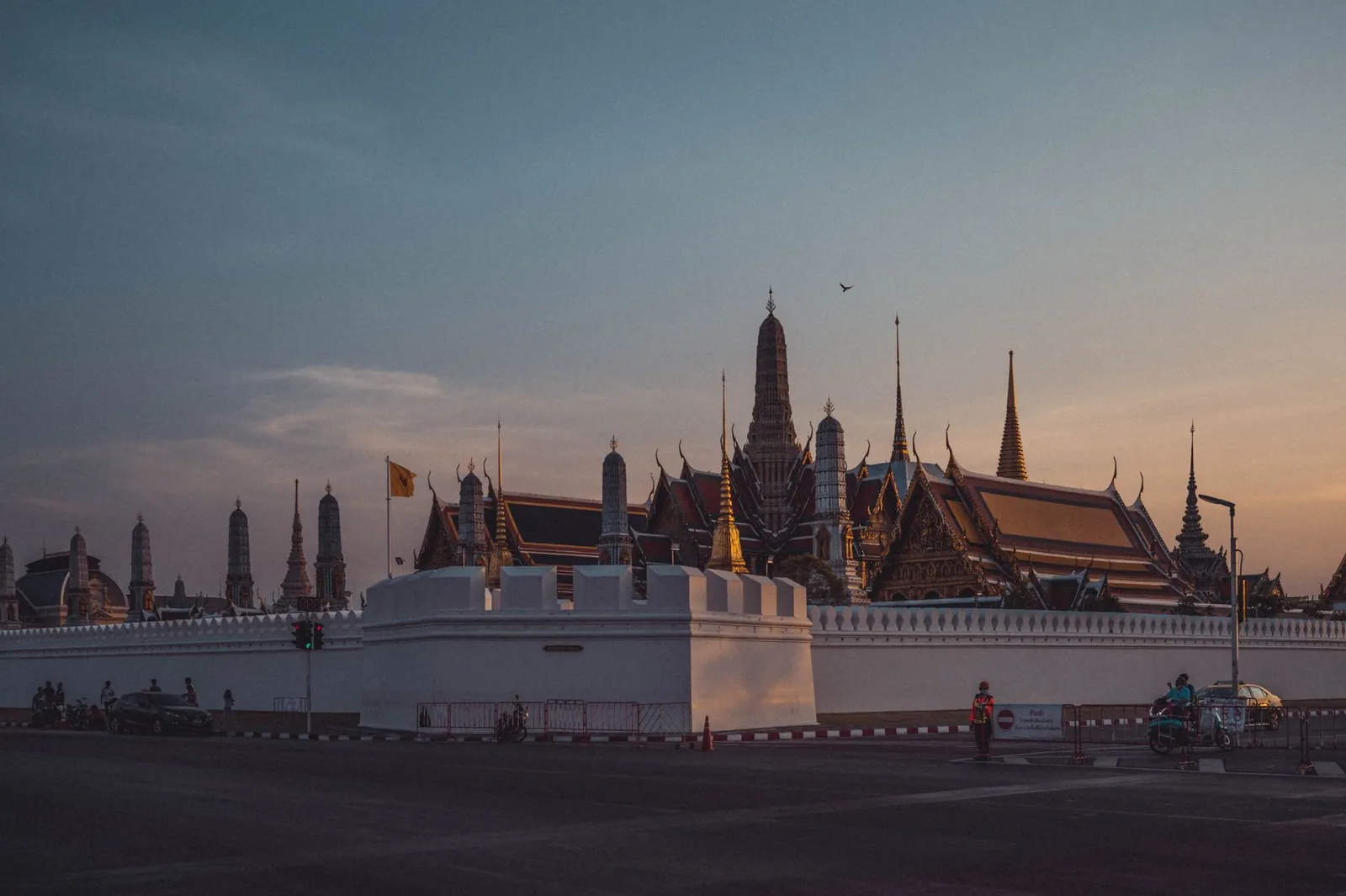
The Grand Palace and Wat Phra Kaew are genuinely obligatory, genuinely magnificent and genuinely hot by 10am, so go at opening, dress covered (shoulders and knees; sarongs on sale outside if you forget) and give it two unhurried hours. Wat Pho next door holds the enormous reclining Buddha and the massage school that invented the discipline; the post-sightseeing massage there is one of travel's great sequencing decisions. Wat Arun rewards a ferry crossing in late afternoon, climbing its porcelain-studded spire as the light softens. Jim Thompson House explains silk, mystery and mid-century Bangkok in one elegant compound, and its air conditioning is its own attraction. Beyond those, resist completionism: Bangkok has hundreds of temples, and three visited slowly beat ten survived.
Evenings belong to the rooftops, the riverside night markets and Chinatown's Yaowarat Road, where the food stalls ignite after dark and the neon does the sightseeing for you.
Eating Bangkok: the rules of joy
Bangkok street food deserves its reputation, and the entry rules are simple: queues of locals mean turnover and safety, dishes cooked to order in front of you beat trays sitting warm, and the vendor who does one dish has usually spent a lifetime on it. Start with the canon: pad kra pao over rice with a fried egg, boat noodles in Victory Monument's alley, som tam pounded to your chilli tolerance (start low; they mean it), mango sticky rice in season, and a proper tom yum somewhere that makes you sweat happily. Chinatown after dark and the Or Tor Kor market by day are the two densest concentrations of excellence.
Two honest cautions: ice in reputable places is factory-made and fine, tap water is not for drinking, and the infamous "Thai spicy" is a genuine hazing ritual, so calibrate before you boast. Food tours on night one, bookable below through our partners, teach you to read the street confidently for the rest of the trip.
What to skip, said plainly
The gem showrooms a friendly stranger insists are "government approved today only": always a scam. The tuk-tuk offering a full-day tour for pocket change: a commission circuit in disguise. Tiger selfie venues and most animal shows: skip on ethics alone. The floating market day-trip when you have only three days: replaceable with canal boats and better spent eating. Ping-pong show touts on lower Sukhumvit: the bill at the end is the show. None of this makes Bangkok hostile; it makes it a big city with a tourist economy, and confident refusal is a complete defence.
A three-day shape that survives the heat
Day one, royal Bangkok: Grand Palace at opening, Wat Pho and the massage, ferry to Wat Arun for late afternoon, riverside dinner. Day two, modern Bangkok: Jim Thompson House early, Siam malls or MBK through the heat, BTS to Thonglor for coffee-shop wandering, rooftop bar at dusk, Chinatown for dinner. Day three, market Bangkok: Chatuchak weekend market at opening (weekdays substitute Or Tor Kor and the flower market), afternoon by the hotel pool, canal boat east at golden hour, final feast wherever the first two days pointed you. The underlying rhythm, mornings out, afternoons cool, evenings eating, is the entire secret of enjoying Bangkok in any season.
Day trips that earn the drive
Once the city's essentials are banked, three excursions justify leaving it. Ayutthaya, the ruined former capital an hour or so north, scatters headless Buddhas and crumbling prangs across a river island; go by early train or minivan, hire a bicycle or driver between the temple clusters, and be back for dinner. The Maeklong railway market, where vendors fold their awnings off the tracks as the train eases through their stalls, pairs naturally with Amphawa's weekend floating market for a single long day west of the city. Bang Krachao, the green "lung of Bangkok" in a loop of the river, is the low-effort option: a two-minute boat hop, a rented bicycle, and elevated paths through jungle and coconut groves fifteen minutes from downtown, best on weekends when the Bang Nam Phueng market operates.
The honest sequencing advice: none of these belong in a three-day first visit, which the city itself fills comfortably. On a four or five day stay, or a return trip, one day trip is the right dose, and Ayutthaya is the one with the most to say. Bookable tours with hotel pickup remove the logistics entirely and appear through our partners below.
Getting there, and using Bangkok as your gateway
Bangkok sits in that friendly zone where full-service one-stop and non-stop options compete hard from Australian cities, and where the same ticket often continues to Europe, India or the rest of Southeast Asia; as a stopover, 48 Bangkok hours cost little and add a country to the trip. Thai Airways, Qantas and the Asian full-service carriers all contest the corridor, allowances and cabins differ meaningfully, and fares move daily, which is why we quote each trip individually. Request your Bangkok fare quote and a consultant replies within 2 business hours with wholesale options across the airlines, whether Bangkok is the destination, the stopover or the doorway to somewhere else entirely.