
Kochi and Kerala Travel Guide - Backwaters and Tea Hills
Kerala is the India recommended to people who think they might not like India, and Kochi is its perfect front door. Spice-trade history, palm-shadowed backwaters, tea mountains and the original wellness tradition, all in one narrow green state that runs at its own unhurried pace.
Kochi first: the front door that is also a destination
Most Indian gateway cities are places you leave quickly. Fort Kochi is the opposite: a spice-trade entrepôt where Portuguese, Dutch, British, Arab, Chinese and Jewish traders all left fingerprints, now settled into leafy streets of warehouses-turned-galleries and some of India's most pleasant café culture. The Chinese fishing nets, the great cantilevered timber contraptions along the shore, are the postcard, best at sunset with the fishing fleet silhouetted behind; buy the day's catch from beside them and a shack will grill it for you.
Mattancherry compresses the history into a morning: the Paradesi Synagogue with its Belgian chandeliers and hand-painted Cantonese tiles, Jew Town's antique warren, the Dutch Palace's astonishing Ramayana murals, and spice godowns still perfuming whole streets with ginger and cardamom. Take a heritage walk here rather than solo wandering; the layers need a narrator. In the evening, a Kathakali performance, arriving early for the ritual of watching the performers build their painted faces, turns dinner theatre into something closer to sacred art. Two days in Kochi is right, and they are gentle, walkable, well-fed days.
The backwaters, without the brochure gloss
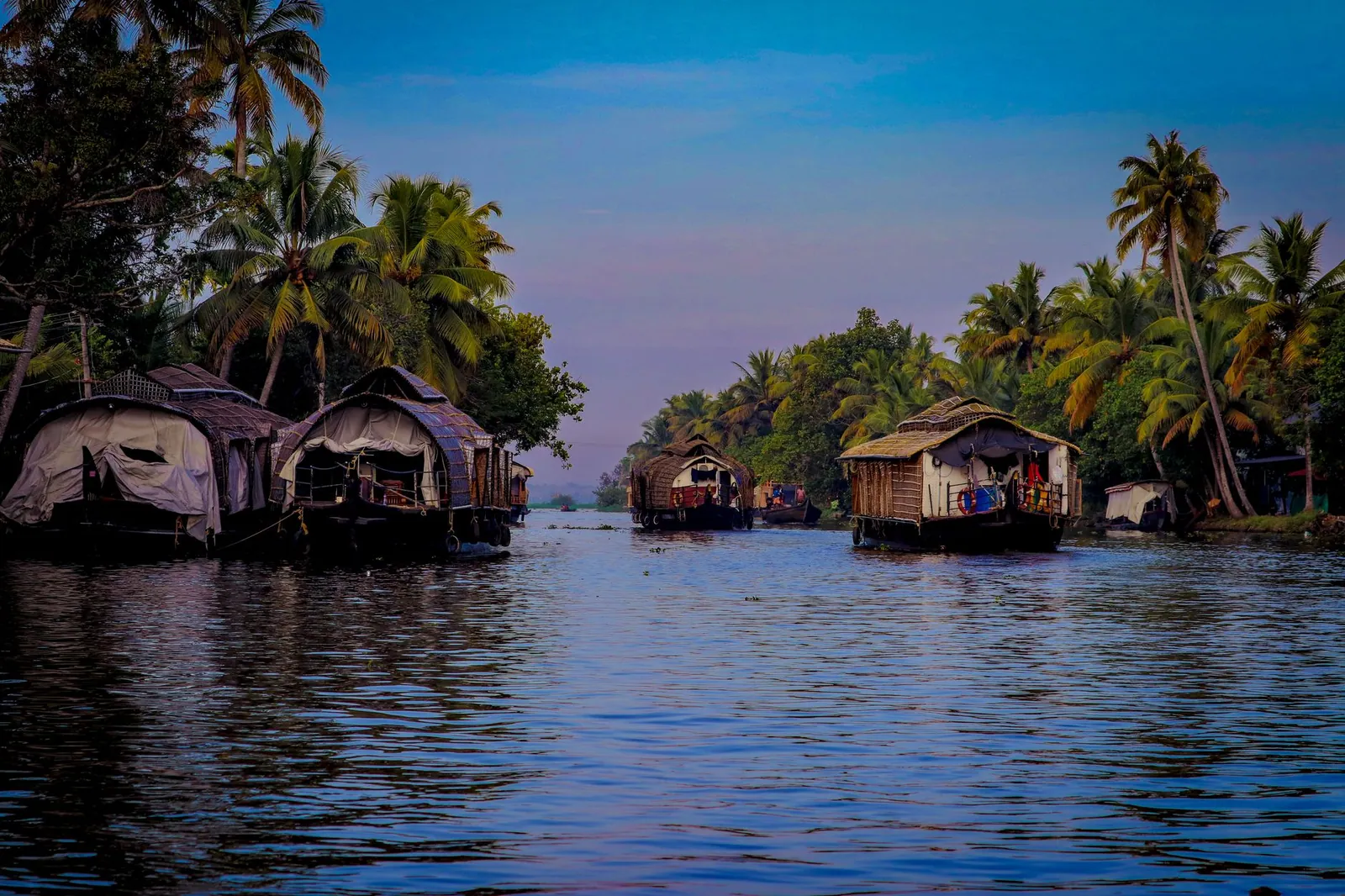
The Kerala backwaters, the lattice of lakes and canals behind the coast, remain one of travel's great slow experiences: paddy fields below water level, village life conducted by canoe, herons auditing the rice. The classic vehicle is the kettuvallam houseboat out of Alleppey or Kumarakom, and the honest guidance is all in the details: one night is the sweet spot, boat quality varies enormously (which is why we book them through accountable operators rather than the cheapest search result), and the deeper magic often lives on the small canals, best reached by village canoe tours rather than the big boats. Travellers who prefer solid ground take a day cruise and sleep in a lakeside heritage resort, trading the novelty for better beds and sunset pools. Either way, the backwaters day earns its place on any itinerary; the choice is only about how you sleep.
Up into the tea: Munnar and the Ghats
Four hours' climbing drive from Kochi, Munnar rearranges the scenery entirely: tea gardens contoured over every hill like green corduroy, air that requires a jumper, and mornings when the valleys fill with cloud below you. The essentials are a tea estate and museum visit (the plucking-to-packet story is genuinely interesting), a sunrise viewpoint drive, and long walks among the bushes; the optional extras are Eravikulam National Park's endangered tahr and the flowering spectacle the hills occasionally stage. Two nights suits it. Wildlife-minded travellers push on to Thekkady (Periyar) for spice plantations and boat-spotted elephants, bending the loop into the classic Kochi, Munnar, Thekkady, backwaters circuit that Kerala trips are built on.
Ayurveda: the reason to come during the rain
Kerala is the home ground of Ayurveda, and it hosts everything from hotel-spa pampering to physician-supervised treatment programs measured in weeks. The distinction matters. Genuine programs begin with a doctor's consultation, prescribe treatments and diet together, and want seven to twenty-one days of your time; the massage-with-incense version is lovely and shallow. The counterintuitive scheduling note: the monsoon months are the traditional treatment season, when practitioners hold the body responds best, and the serious retreats price and program accordingly. A wellness-first Kerala trip in July is not a compromise; it is the orthodox choice, with the rain drumming on the roof as part of the treatment. Tell us if Ayurveda anchors your trip and we will time the whole itinerary around it, starting with the flight quote.
Beaches, and the rest of the green state
Kerala's coast is long and generous: Marari, near the backwaters, does barefoot fishing-village calm; Varkala stacks cafés along a dramatic red cliff above its sands; Kovalam remains the developed classic with its lighthouse curve. None of them are party coasts, and that is the point; Kerala evenings end with seafood and an early night. The further reaches reward return visits: the northern backwaters around Valiyaparamba with barely a houseboat on them, Wayanad's coffee hills, and the Theyyam ritual performances of the far north in season, the most electrifying cultural spectacle in south India.
Eating Kerala: coconut, curry leaves and the world's best breakfast argument
Kerala's kitchen deserves its own planning. Breakfast is the state's masterpiece: appams, lace-edged and bowl-soft, with vegetable stew or egg curry; puttu cylinders of steamed rice and coconut with kadala curry; and idiyappam string hoppers soaking up whatever arrives. Lunch is the sadya tradition, a banana-leaf spread that reaches festival scale at Onam but exists year-round in the meals houses, and the coastal answer is karimeen pollichathu, pearl-spot fish baked in a banana leaf that houseboat cooks have turned into a signature. Toddy-shop food, fiery duck and beef fries alongside the palm brew, is the local secret worth a guided detour; Syrian Christian kitchens add their own stews and pidiyans to the map; and everything rides on coconut, curry leaves and black pepper, the spice that built these ports in the first place.
Two practical notes: Kerala eats early and gently by Indian metro standards, so plan dinners before nine, and the state's food is naturally kind to cautious stomachs, cooked fresh, coconut-based and less chilli-forward than its neighbours, which is one more reason it suits first India trips. A Fort Kochi food walk on night one sets the vocabulary for the week.
A seven-day shape that works first time
Days one and two, Fort Kochi's history, food and Kathakali. Days three and four, the climb to Munnar and the tea country's viewpoints and walks. Day five, descend to the backwaters for the houseboat night or the day-cruise-plus-resort alternative. Day six, Marari or Varkala beach, doing nothing with commitment. Day seven, back to Kochi for spice-market shopping and the flight home smelling of cardamom. Swap in Thekkady or an Ayurveda block as priorities dictate; the state is compact enough that no drive between stops exceeds a scenic half-day. Cars with drivers are the standard glue for the circuit, arranged before you fly, and the tour options below cover the day experiences.
Getting there from Australia
Kochi's international airport receives one-stop full-service itineraries from Australia via the Asian hubs, with additional routings through the other Indian metros on protected through-tickets, and it consistently ranks among India's most pleasant arrivals. December and January carry the peak, when Kerala's diaspora and the dry-season tourists arrive together and early quotes genuinely pay; the monsoon months flip to value season for the Ayurveda-minded. Fares move daily and are quoted individually. Request your Kochi fare quote and a consultant replies within 2 business hours with wholesale fares, and if the plan runs wider, into Chennai, Bengaluru or the full India network, we will quote the circuit as one itinerary.