
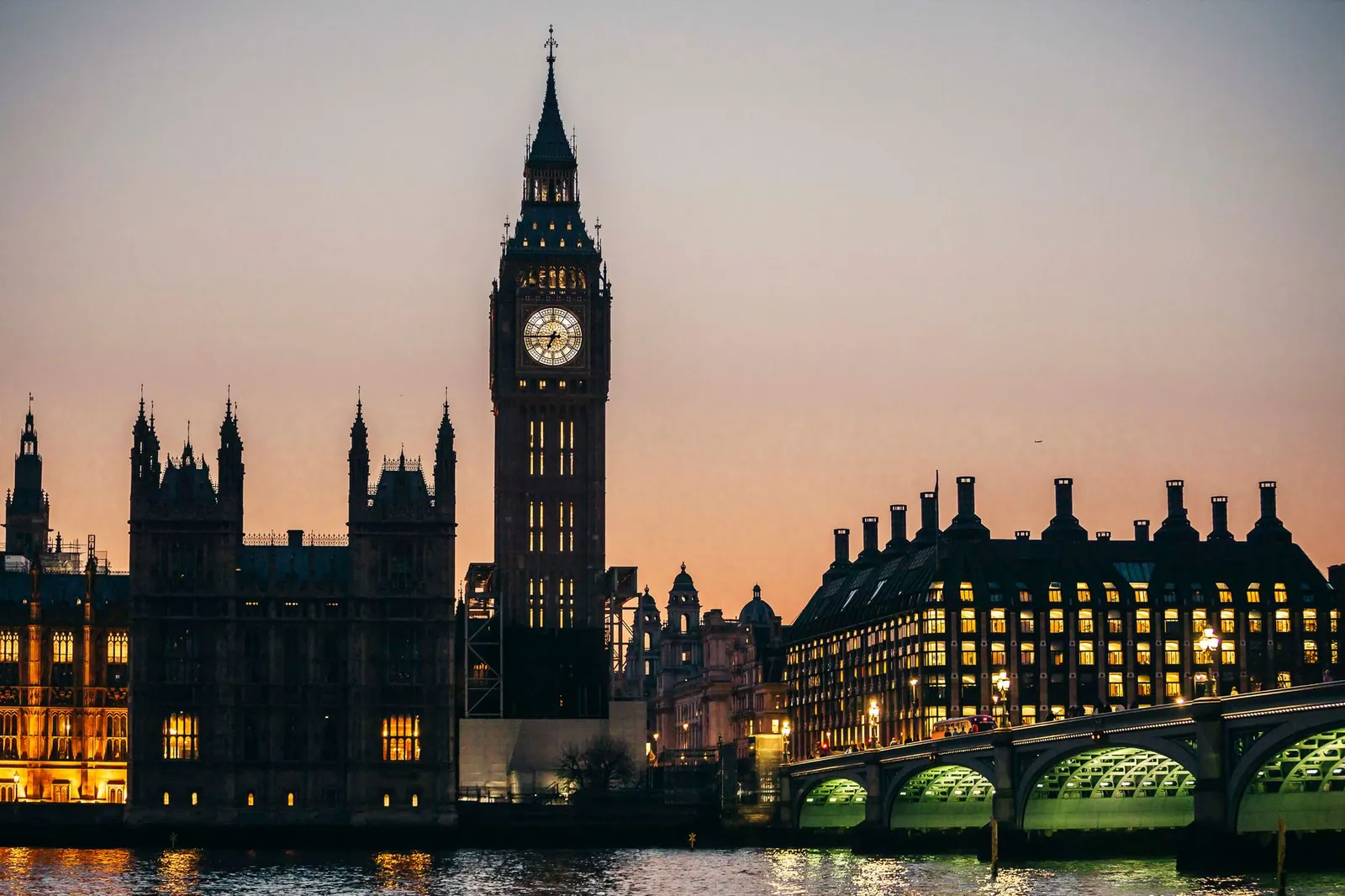
Best Hotels in London - Choose the Tube Line First
Australians book London hotels by trying to be central, which is how you end up paying a great deal to sleep in the least interesting square kilometre of a wonderful city. The tube line matters more than the postcode.
Stop trying to be central
Here is the loop that plays out on almost every London booking we see.
An Australian looks at a map, decides they must be central, filters for Zone 1, and books a bland chain hotel with a tiny room on a street with nothing on it, for a great deal of money.
They have paid a premium to sleep in the least interesting square kilometre of one of the world's great cities.
London's tube is genuinely excellent. That is the fact that should drive this decision. A hotel in Zone 2, on a fast line, is frequently ten minutes from the middle of town and considerably cheaper, in a neighbourhood where people actually live and eat.
The question is not which zone. It is which line, and how far is the real walk to the station. Ask us to shape a London trip.
The areas, honestly
South Kensington. The first-timer's answer and a good one. The three great free museums are there, the streets are handsome, it is walkable and it sits on useful lines. Not cheap and not thrilling, and genuinely pleasant.
Bloomsbury. Our quiet pick for a first visit. Central without being touristy, garden squares, the British Museum on your doorstep, King's Cross and Euston for onward trains, and better value than Kensington.
Shoreditch or Bermondsey. A better time, a slightly longer ride, and the food is where the city actually is now. If it is your second London trip, this is where we would put you.
Marylebone. Underrated. Village-ish, central, and calmer than anywhere with the same postcode has a right to be.
Mayfair and the West End. If money is not the constraint, they are what they are, and the theatre is on your doorstep.
Paddington or Victoria. Convenient and dull. You are booking a transport interchange, not a place.
Our London travel guide argues that the city you already know from television is about four percent of what is there, and where you sleep is the easiest lever on whether you find the rest.
The room size problem
Say it plainly, because Australians underestimate it every time.
London hotel rooms are small. Most of the stock is converted Georgian and Victorian houses that were never designed as hotels, with staircases, odd angles and rooms that were once somebody's box room. The purpose-built ones sit on land that costs a fortune, so they are efficient rather than generous.
A London double can be genuinely tight. Category names do not mean what they mean at home.
This is not a reason to book further out; the trade is usually still worth it. It is a reason to look at the actual room rather than the star rating, and to ask us when the listing is vague.
The air conditioning question
The single most useful thing on this page if you are travelling in summer.
Most London hotels do not have air conditioning, because most of the building stock predates the idea and the climate historically did not require it.
The climate has moved. A London heatwave, in a top-floor room, with a sash window that opens ten centimetres for safety, is genuinely unpleasant, and Australians assume a European city hotel will be cooled because ours are.
If you are going in July or August, check this before anything else. It matters more than the postcode, more than the room size and more than the breakfast.
Our best time to visit Europe guide argues at length that you should not be going in July anyway, and this is one of the reasons.
Do not stay at the airport
Heathrow has fast rail links into central London, including a line that costs very little and a faster express that costs more and saves maybe twenty minutes.
So an airport hotel buys you almost nothing and costs you a London evening. The exception is a genuinely brutal early departure, and even then the maths rarely works once you count what you paid to sleep next to a runway.
Our London travel guide makes the case for Heathrow over the budget airports properly: Stansted and Luton are a genuine expedition from the city, and if a cheap European leg offers you one of them, price the transfer before you accept it.
The free museums change the calculation
Worth saying on a hotels page, because it affects where you should sleep.
The national collections are free: the British Museum, the National Gallery, the Tates, the Natural History Museum, the V&A, the Science Museum. Free to walk into, permanently.
The correct way to use them is the opposite of how visitors do. Do not attempt the British Museum in a day; it cannot be done. Go for ninety minutes, see four things properly, and come back another morning.
Which means proximity is worth something real. A hotel in Bloomsbury or South Kensington lets you treat a world-class museum like a coffee shop, and that is the single best thing about staying in this city. It is also why we would rather put you near a great museum than near a famous street.
When rates move
June to August is the peak, expensive, busy, and hot in a city with no air conditioning.
May, September and October are the sweet spot: long days, mild, everything open, and the rates are noticeably softer.
January and February are genuinely cheap and the museums are empty, which is a different and arguably better London. The catch is not the cold, which is milder than Canberra. It is the dark: it is dark by four in the afternoon, and that shocks Australians more than the temperature does.
Christmas and New Year is its own peak and it books early.
The practical notes
Check the actual walk to the station, not the listing's claim. Twelve minutes with a suitcase in the rain is a different hotel from the one you booked.
Just tap your card. Contactless bank cards and phones work on every bus, tube and train, with the same fares and daily caps as a travel card. You do not need to buy anything, and everyone in your group needs their own card.
Breakfast is rarely worth including. London does breakfast better outside hotels than in them, at a fraction of the price.
Five nights minimum. Australians give London three because Paris is waiting, and then wonder why it did not land.
Rates move constantly and the good locations go first, particularly in summer. Get a free London quote and a consultant will reply within 2 business hours with wholesale fares in Australian dollars, and the Melbourne to London and flights to UK pages cover the corridor.
Booking notes
Prices shown by our partner are live and arrive in Australian dollars from our links, so the pound conversion is done for you before you commit, and free cancellation windows are stated on each listing. Our current hotel partner is Agoda, whose scores run out of 10 and come only from guests who completed the stay, with AgodaCash credit on eligible bookings that carries over to the Asian leg if London is one stop on a longer trip.