
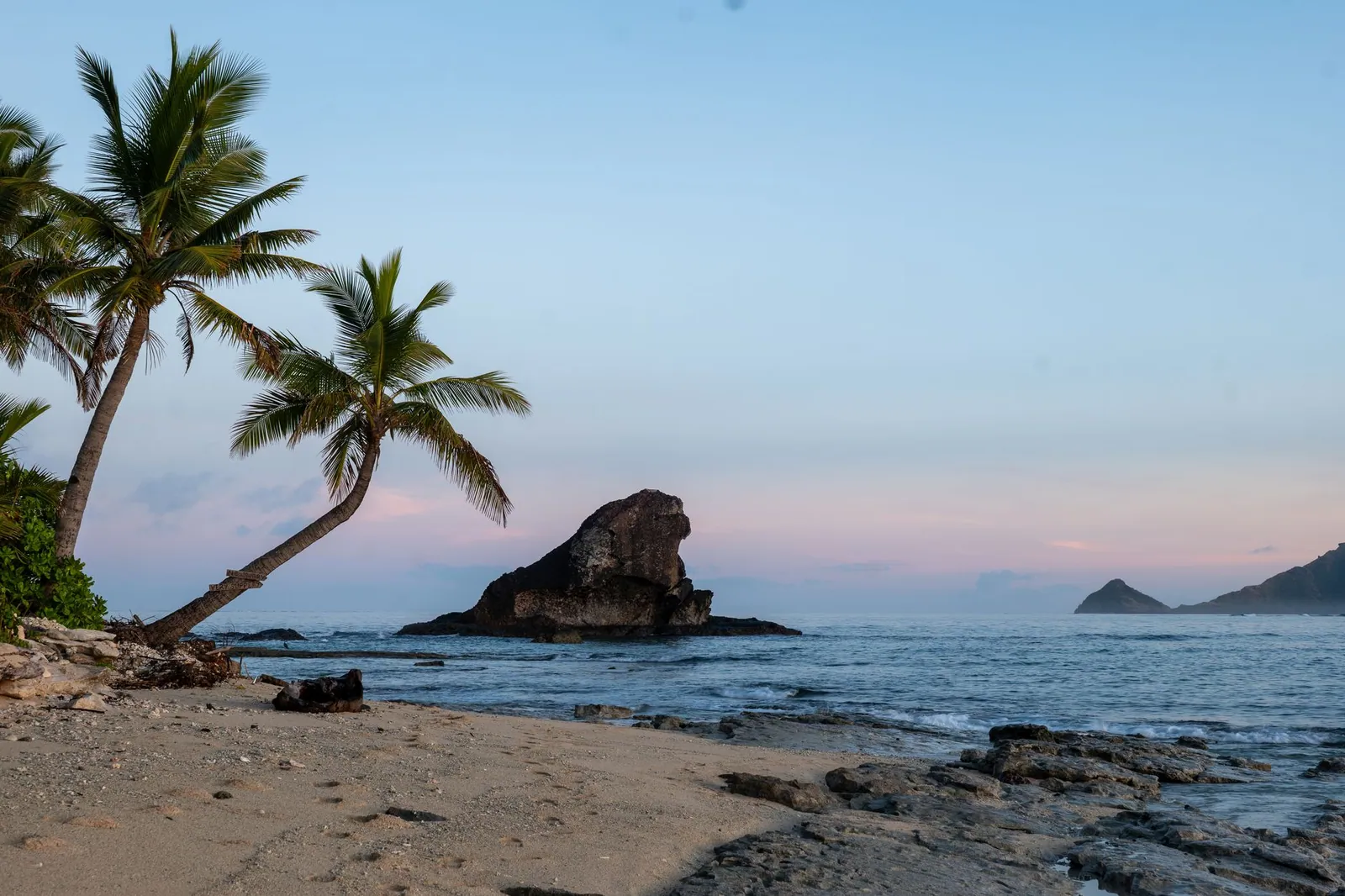
Fiji Travel Guide - Choose the Island Group First
Fiji is not one destination, it is about a dozen, and the decision that shapes your holiday is made before you book a single night: which island group, and how you get to it. Nadi, where you land, is almost never the answer.
The decision you make before you book anything
Fiji has more than three hundred islands and roughly a dozen distinct ways to have a holiday among them. Australians book it more casually than almost any other destination, because it is close and familiar, and then a good number of them come back having had a slightly wrong holiday.
The mistake is almost never the resort. It is the island group, and the transfer that comes attached to it.
Get this right and Fiji is close to unimprovable. Get it wrong and you spend the first day of a seven-day holiday on a boat, and the last one on a boat, and you resent the water. Ask us which island group fits.
Nadi is not Fiji
Start here, because it is the most common error.
You land at Nadi. Nadi is an airport town on the dry western side of the main island. The beach there is not the beach in the pictures, the water is not the water in the pictures, and nothing about it explains why anyone flies to the South Pacific.
That is not a criticism of Nadi. It is simply not the product. It is where the airport is.
So the rule is: land, and if your flight arrives late, sleep one night nearby and move first thing. If your flight arrives in the morning, move the same day. Travellers who book seven nights in Nadi because it was cheap and convenient have booked seven nights next to a runway, and they are the ones who tell you Fiji was overrated.
The four Fijis, honestly
The Mamanucas. The closest island group, reachable by a reasonably short boat or a very short flight, and the practical family answer. Genuinely lovely water, small islands, day trips available, and if something goes wrong you are not far from anything. Busier than the Yasawas, and that is the trade.
The Yasawas. Further out, more beautiful, quieter, more remote. The boat is a serious journey rather than a hop, and the further up the chain you go, the longer it takes. This is where the postcard lives, and the price of admission is time. Worth it for couples and for anyone who wants the island to actually feel like an island. Less good if you have small children who will not enjoy several hours on a catamaran.
The Coral Coast. The southern side of the main island, no boat required, a car and a road and villages and a stretch of resorts. This is the underrated answer for a lot of travellers: you can leave the property, you can meet Fiji rather than a resort's version of it, and there is no transfer at all. The water is not the desert-island water. Accept that and the Coral Coast is excellent value.
Denarau. A peninsula near Nadi, entirely purpose-built, with the big-brand resorts, a marina and a golf course. It is convenient, it is comfortable, and it is essentially a resort estate rather than a place. Some people want exactly that, particularly with very young children, and there is no shame in it. Just know what it is.
The transfer is the thing nobody prices
This is where Fiji gets more expensive than people expect, and it is the single most useful thing on this page.
The flight from Australia is four hours and it is the cheap part. Getting from Nadi to your island is a second journey with a second cost, and it is frequently not included in the resort rate. It can be a boat that takes hours and departs on a fixed timetable that may not match your flight. It can be a seaplane or a small aircraft, which is quick and lovely and dearer again. It can be a helicopter, which is quicker and lovelier and dearer still.
The consequences are practical. A late arrival into Nadi can mean the last boat has gone, which means an unplanned night on the main island. A resort that looked good value can stop looking that way once two adults and two children have been transferred to it and back. And a Yasawas resort four hours up the chain has quietly taken most of a day off each end of your holiday.
None of this makes the islands a bad idea. It makes them a thing to plan rather than assume. When we quote Fiji we price the transfer alongside the fare, because the two are one decision and only one of them appears on a flight search. It is the same argument our why use a travel agent guide makes in general terms, and Fiji is where it is most concrete.
What Fiji is actually good at
Water that does what it does in photographs. Out in the island groups, this is real and it is not enhanced. It is genuinely startling the first time.
People. Fijian warmth is not a tourism-board line and it is not performed. It is the single most consistent thing travellers report back to us, and it is why the repeat rate on this destination is so high.
Children. The resorts here take children seriously in a way most tropical destinations do not, and Fijian staff are extraordinarily good with them. Parents who have not had a meal alone in three years come back changed.
Diving and snorkelling. The soft corals are world class and the dry-season visibility is superb. The Great Astrolabe Reef and the Somosomo Strait are serious diving; the house reef at a decent island resort is enough for everyone else.
Doing nothing. Fiji is one of the few places where a week of reading a book by water is the correct itinerary and nobody will make you feel bad about it.
What it is not
It is not a cultural touring destination in the way Bali or Sri Lanka are. There is real culture here and it is worth meeting, but you meet it through a village visit, a kava ceremony or a lovo feast, not through monuments and museums.
It is not cheap once you count the transfers. Fiji has a reputation as the budget tropical option from Australia and that reputation is a decade or two out of date, particularly for the outer islands.
It is not a place to fill a rigid itinerary. The boats leave when they leave, the weather does what it does, and Fiji time is a real and pleasant phenomenon that will defeat anyone who arrives with a schedule.
The seasons, plainly
May to October is the dry season and it is the reliable one. Lower humidity, less rain, the best diving visibility, and the weather doing what you booked it to do. It is also the peak, and it overlaps with Australian school holidays, which is when the family resorts fill and the fares harden.
November to April is the wet season and also the cyclone season. The rain generally comes in heavy bursts rather than grey days, the islands are greener, and the prices fall substantially. Plenty of Australians go anyway and have a fine time. What we will say honestly is that a cyclone is a real possibility rather than a theoretical one in that window, and it is the season where travel insurance stops being a formality and starts being the point.
Practical bits
Kava. If you are invited to a sevusevu, the village welcome, go. Bring the root if your guide tells you to, sit where you are put, clap when you are told, and drink it. It tastes like earth and it numbs your mouth and it is the single most genuine hour available in Fiji.
Sunday. Fiji is a serious church-going country and Sunday is observed properly, particularly in villages. Things close. Singing happens. It is worth experiencing rather than working around.
Dress in villages. Shoulders covered, and a sulu or something over your knees. Hats off. Sunglasses off. This is not a tourist rule, it is basic respect, and Fijians notice when you have bothered.
The flight. Around four hours from Sydney, which is short enough that the cabin barely matters. Our advice is to spend nothing on the flight and spend the difference on getting the island right, which is the exact opposite of the advice we give on long-haul routes.
Send us your dates, who is travelling and what you want the week to feel like, rather than a resort name, and we will tell you which island group that describes and what the transfer to it genuinely costs. Get a free Fiji quote.