
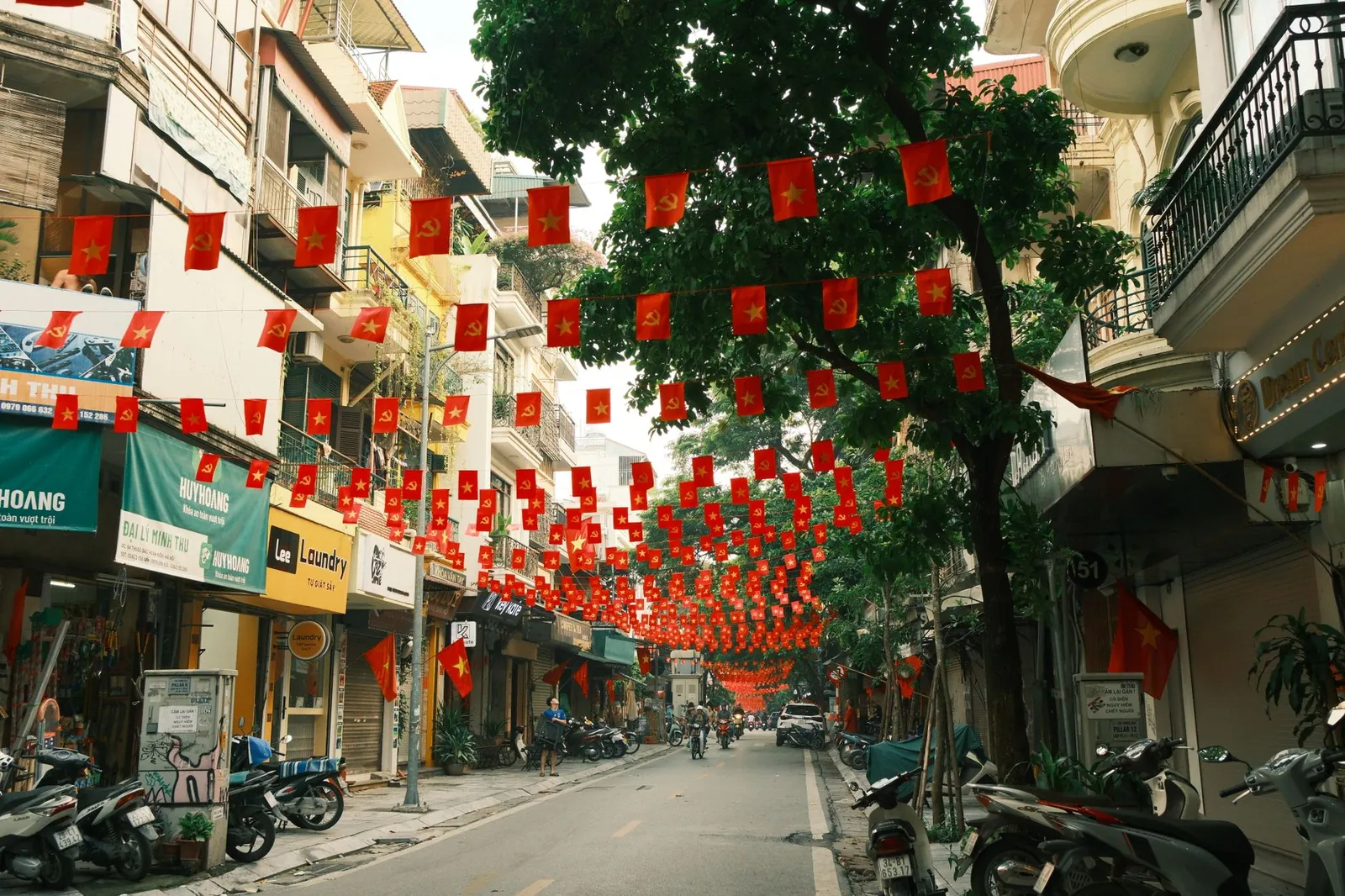
Hanoi Travel Guide - the Old Quarter and Ha Long Bay
Hanoi is a thousand years old, it is the least polished major city in South East Asia, and it is the better of Vietnam's two ends. It also gets genuinely cold, which nobody tells Australians, and which ruins more trips here than anything else.
Pack a jacket, and we mean it
Start with the thing that ruins the most trips here.
Northern Vietnam is not tropical. Hanoi sits far enough north to have a genuine winter, and from roughly December to February it can be properly cold and damp, with a grey lid on the sky that does not lift for days. Not Melbourne cold. But cold enough that a person in a singlet is miserable, and drizzly enough that it stays with you.
Australians consistently arrive here having packed for Bali, because South East Asia is filed in our heads as one climate. It is not. Ha Long Bay in February can be fog and grey water. Sapa can be near freezing.
None of this is a reason to avoid winter, which has its own atmosphere and much thinner crowds. It is a reason to know. Ask us about Vietnam timing.
The Old Quarter is the reason to come
Hanoi is a thousand years old and the Old Quarter shows it in a way that has almost no equivalent left in the region.
It is a dense grid of narrow streets, and the striking thing is that most of them are still named for the single trade that has occupied them for centuries. Hàng Bạc was silver. Hàng Mã was paper goods, and it still is, so an entire street glows with red and gold votive paper. Hàng Thiếc was tinsmiths, and men are still hammering metal in doorways. The specialisation survived the war, the French, socialism and tourism, and it is genuinely medieval urbanism still functioning.
You do not do the Old Quarter. You get lost in it, on purpose, for three days. Sit on a plastic stool the size of a child's chair, drink bia hơi, which is fresh draught beer brewed daily and drunk the same day, and watch a street where the shopfront, the workshop, the kitchen, the living room and the motorbike park are the same four square metres.
That is the whole attraction and it is enough.
Crossing the road is a skill
Everyone writes about this and everyone is right.
There are a great many motorbikes and they do not stop. What they do is flow, and flow works on prediction. So: step off the kerb, walk at a constant speed, do not run, do not stop, do not change your mind halfway across, and do not make eye contact and dither. The bikes will calculate where you will be and go around you.
The people who get into trouble are the ones who bolt, or freeze in the middle, because both make them unpredictable. It feels completely insane for about ten minutes and then it feels obvious, and by the end of a Hanoi trip you will be doing it while looking at your phone, which is when it is time to go home.
What to actually see
Hoan Kiem Lake is the city's centre of gravity, and it is best at about half past five in the morning, when hundreds of people are doing tai chi, badminton, aerobics and running around it in the half-light. Go once at dawn. It is the most charming thing in Hanoi and it is free.
The Temple of Literature is Vietnam's first university, nine hundred years old, courtyards and stelae carried on stone tortoises listing the names of graduates. Calm, beautiful, an hour.
The Ho Chi Minh Mausoleum is a serious place and it is treated seriously. He is there, embalmed, guarded, and the queue is silent and long. Rules on dress and behaviour are enforced without negotiation, and it closes for a period each year for maintenance. Whatever your politics, it tells you something no museum will.
Hoa Lo Prison, which American prisoners called the Hanoi Hilton, is uncomfortable and one-sided and absolutely worth ninety minutes, if only because you are hearing the other side of a story most Australians only know one version of.
The water puppet theatre sounds like a tourist trap and is not. It is a genuinely ancient northern Vietnamese art form performed in a pool with a live orchestra, it lasts about an hour, and it is delightful.
The Train Street, where the railway runs through a residential lane a metre from people's front doors, has been repeatedly closed and reopened for safety reasons. Check what the situation is when you are there rather than assuming, and if it is closed, respect that rather than finding the cafe that will sneak you in.
Eat like it is the point, because it is
Hanoi's food is the best argument for Hanoi.
Phở is northern, it is from here, and the Hanoi version is cleaner and less garnished than the southern one: broth, noodles, beef, a few herbs, no sauce bottles. Eat it for breakfast, standing or on a low stool, from a place that sells nothing else.
Bún chả is the Hanoi dish. Grilled pork in a bowl of dipping broth, cold rice noodles, herbs, and you assemble each mouthful yourself. It is lunch, not dinner.
Egg coffee is a Hanoi invention and it is not a gimmick. Yolk whipped with condensed milk into a warm custard on top of strong coffee, invented when milk was hard to get. It is somewhere between a drink and a dessert, and it is genuinely lovely.
Bia hơi is the fresh beer, brewed and delivered daily, drunk the same day, sold on street corners at a price that is essentially a rounding error. It is not a great beer. It is a great institution.
Chả cá is a fish dish so specific there is a street named after the restaurant that made it famous. Turmeric, dill, a pan on your table.
Ha Long Bay deserves a night
Take the overnight. Do not take the day trip.
The day trip is roughly four hours of bus, four hours of bay, four hours of bus, in a convoy with everyone else's day trip. The bay's best hours are the early morning, before the sun burns off the mist, and the evening after the day boats have gone back. You cannot see either of those from a day trip. That is not a small distinction; it is the whole difference between a nice photograph and the reason people go.
One night on a decent boat, two nights if you want to reach the quieter parts, and consider Lan Ha Bay or Bai Tu Long, which are the same karst landscape with fewer vessels in it.
The other honest note: the bay is weather-dependent in a way brochures do not admit. In winter it can be flat grey fog, which is atmospheric if you decide it is and disappointing if you were expecting the postcard. Our flights to Vietnam page covers the seasonal picture, and the visa rule below matters more here than the weather.
The visa is not optional
Australians generally need a visa for Vietnam, arranged before you travel, most commonly the e-visa applied for online.
This catches people out constantly, because so much of the region waves us through on arrival. Vietnam does not. Apply in advance, allow processing time, check the current rules on an official source rather than a blog, and make sure the details on the application match the passport exactly, because they are checked.
It is a small piece of admin and a very large problem if you skip it.
The seasons, narrower than you think
October and November are the best window: dry, mild, clear. Our first recommendation.
March and April are the second window, warming up, generally pleasant.
May to August is hot and extremely humid with serious rain, and it is the season most Australians book because it lines up with our winter. It is doable. It is sticky.
December to February is the northern winter described at the top of this page: cold, grey, damp, and much quieter. Some travellers love it. Nobody who packed for the tropics loves it.
Most Vietnam trips should take in both ends of the country, and the smart construction is an open jaw: into Hanoi, out of Ho Chi Minh City, or the reverse, with the middle done by land or a domestic hop. Flying in and out of the same airport in a country this shape costs you a full day of backtracking. Booking sites price open jaws badly when they price them at all; it is routine for a consultant, and it is one of the clearest illustrations of the point our why use a travel agent guide makes. Get a free Vietnam quote.