
Kolkata Travel Guide - Trams, Food and Durga Puja
Kolkata is the city Indians argue about most affectionately and Australians visit least. It has the country's only surviving tram network, its best street food, its most serious literary culture, and a festival that turns the whole city into an art gallery for five days.
The best city in India, and nobody goes
We should declare the bias immediately: this is our favourite Indian city, and we send fewer clients here than to almost anywhere else on this site.
The reason is structural. Kolkata is not a monument city. There is no Taj, no Amber Fort, no thing to photograph and tick. What there is instead is a place: a city of two hundred years of colonial architecture decaying spectacularly, a genuine literary and political culture, the country's last trams, the country's best street food, and a population that will argue with you about football, fish and Tagore with equal seriousness and equal warmth.
If you travel to see sights, go to Rajasthan. If you travel to be somewhere, come here. Ask us about Kolkata fares.
The city is the sight
Three days here should be spent mostly on foot and mostly without a plan, but a few anchors help.
North Kolkata is the old city and the best walking in India. Narrow lanes, crumbling mansions with courtyards still in use, family houses subdivided over generations, rickshaws pulled by hand, which still exist here and nowhere else and which raise complicated feelings that are worth having. Kumartuli, the potters' quarter, is where the idols for the festivals are made from Ganges clay by hundreds of sculptors working in open workshops, and you can walk through it any day of the year and watch gods being built.
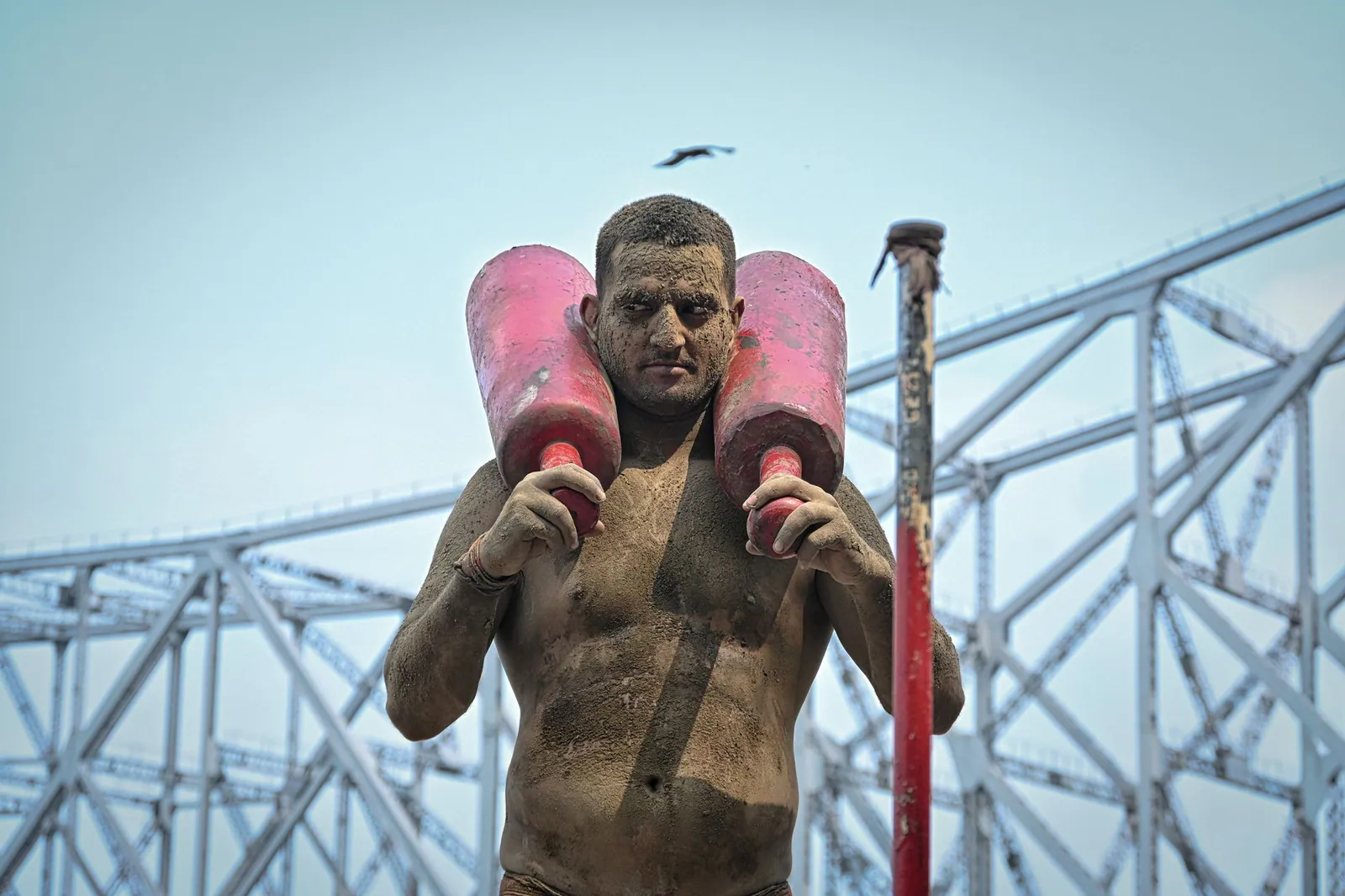
The Maidan is an enormous green in the middle of the city, and on any morning it holds football, cricket, goats, horses, wrestlers and men doing yoga. The Victoria Memorial sits on the edge of it, an absurd white marble pile that the British built to commemorate an empire that was about to end, and it is beautiful and slightly ridiculous and worth an hour.
College Street is a street of nothing but bookshops, kilometres of them, stacked on the footpath, and it is the largest second-hand book market in the world by most accounts. Halfway down it is the Indian Coffee House.
Howrah Bridge carries an extraordinary volume of people daily and it is best seen from the river. Take a ferry across at dusk rather than a taxi over it.
Park Street is where the city drinks and remembers, and the cemetery at the end of it is a startling piece of Georgian melancholy full of very young dead.
The Coffee House
There is a room near the university with high ceilings, slow fans, a mezzanine and paint that has not been touched in living memory. The coffee is not good. The service is a shrug.
It is one of the last of its kind in India and it is the heart of the city's self-image: generations of students, writers, film-makers and revolutionaries arguing over one cup for three hours. There is a famous Bengali song about it. Everybody's uncle has a story about it.
Sit for an hour, order the coffee, do not expect anything from it, and understand that the point is the room and the noise in it. This is Kolkata's version of a monument.
The trams, while they last
Kolkata runs the only tram network left in India, and one of the oldest still operating anywhere in Asia.
Be honest about what it is now: much diminished, slow, and its future has been under debate for a long time. Whole lines have gone. What remains is a handful of routes running old cars through streets that were built around them.
Ride one anyway. It costs nothing, it is a rolling museum, and it is one of those things you will be glad you did rather than glad you read about. Check locally what is actually running rather than trusting any route map you find online, including ours.
Durga Puja is the reason to plan a trip
If your dates have any flexibility, aim at this.
For several days, usually in September or October, Bengal stops. Neighbourhoods across Kolkata commission temporary structures called pandals, and the word "temporary" understates it enormously: these are enormous, artist-designed, thematically ambitious buildings, some of them architecturally serious, each housing an idol of the goddess Durga. There might be thousands of them across the city.
And then everybody walks. All night, for days, between pandals, in crowds, eating, judging, comparing, with the whole city functioning as an open-air art competition. It is on the UNESCO intangible cultural heritage list, which is unusual for a festival, and it earns it.
The practical notes are serious. Hotels book out months ahead and prices rise sharply. The crowds are genuinely enormous. Moving around takes many times longer than normal. And it is completely worth it. Our flights to India page covers the booking calendar, and this is one of the few festivals we would tell you to book flights around rather than fit into.
Bengali food deserves its own section
The claim: Kolkata has the best street food in India. We will hold that against all comers.
Kathi rolls were invented here: a paratha, egg-fried, wrapped around kebab meat, onion and a squeeze of lime. Every other Indian city sells a worse version.
Puchka is what the rest of India calls pani puri, and the Kolkata version is fiercer, more tamarind-heavy and served by a man who will keep handing them to you until you physically stop him. Doing exactly that, standing on a footpath, is one of the great pleasures available in this country.
Fish is not optional. Bengal is a river delta and Bengalis regard fish with a seriousness that other Indians find funny and that is entirely justified. Ilish, the hilsa, is the obsession, full of bones and worth the effort, and its short season is a matter of genuine public feeling. Bhetki, in a mustard sauce, is the safer introduction.
Mishti, the sweets, are a daily requirement rather than a treat. Rosogolla and sandesh are the famous ones, both made from fresh cheese, both far less sugary than north Indian sweets, and Bengal and Odisha have argued about who invented the rosogolla for a very long time.
Kosha mangsho, a slow, dark, deeply reduced mutton, is the Sunday lunch.
The other thing worth saying: Bengali home-style cooking is a subtle cuisine built on mustard oil, panch phoron and freshwater fish, and it is nothing like the restaurant Indian food Australians know. Seek out a place doing a proper Bengali thali rather than a hotel buffet.
When to come, and getting here
November to February is the season and it is genuinely lovely: mild, dry, the city at its most walkable.
September and October brings Durga Puja and the tail of the monsoon, which is a trade worth making.
March to May is hot and humid and Kolkata sits at sea level on a delta, so the humidity is the real story rather than the temperature.
June to September is monsoon, and in a delta city that means water, in quantity, with the flooding that implies.
There is no non-stop from Australia. Every itinerary runs through an Asian or Gulf hub, and some go via Delhi or Mumbai with a domestic connection to finish, which puts a terminal transfer into your day. Which hub you use decides what hour you land, and that decides your first morning. Our Sydney to Kolkata and Melbourne to Kolkata pages go through the routings honestly, including which ones deliver you at three in the morning.
Kolkata is also the natural gateway to the rest of the east: the Sundarbans mangroves, Darjeeling and its toy train, and the north-east states beyond. Almost nobody from Australia does that trip, which is precisely the argument for doing it. Get a free Kolkata quote.