
Kuala Lumpur Layover Guide - KLIA or KLIA2 First
Before you plan anything else about a KL layover, work out which of the two terminals you are in and which one you are leaving from. Get that wrong and the rest of this page is irrelevant.
Which terminal? Answer that first
Every other layover guide starts with what to see. This one starts with a building, because at Kuala Lumpur that is the question that decides everything.
The airport has two terminals in separate buildings, joined by a train. Full-service carriers generally use the main one. The low-cost carriers largely use the other.
The train works fine. The problem is separate tickets. If a cheap search sold you a full-service long-haul plus a low-cost onward flight on a different booking, your "connection" is: clear immigration, collect the bags, take the train, check in from scratch, queue through security again.
That is not a layover you can go sightseeing in. That transfer is your layover, and if the first flight is late, the second ticket simply evaporates.
So before anything else on this page: check which terminal each of your flights uses. If they differ and they are on separate tickets, close this guide and go and sit in the airport. Ask us to build the KL connection.
One terminal, one ticket: now we can talk
If you are staying in the same terminal, or the whole journey is ticketed together so the airline owns the transfer, KL becomes one of the better layover cities in Asia.
The reasons are that it is close, it is cheap, and there is a train.
Under six hours: stay airside. The main terminal is fine, the lounges are decent, and it is easier to move through than Bangkok's. Eat something, walk around, accept it.
Six hours or more: go, and take the train rather than a taxi.
Six to nine hours: the Batu Caves
This is the answer, and it is one of the easiest genuinely impressive things near any airport in the world.
A commuter train from the central station, about half an hour, and you arrive at an enormous limestone outcrop with a giant golden statue at the base and a very long, very steep painted staircase up to a cave temple inside the hill.
Go early if you can. The heat is serious by ten and the monkeys are thieves with no shame whatsoever. Take water.
It is a half-day, it is cheap, it is on a train line, and it is the sort of thing that makes a layover feel like travel rather than transit.
If the caves do not appeal, the alternative is the same as Bangkok's: eat. Take the train in, find banana leaf rice in Brickfields or a mamak stall anywhere, and eat for two hours. Our Kuala Lumpur travel guide explains why the food is the entire argument for this city.
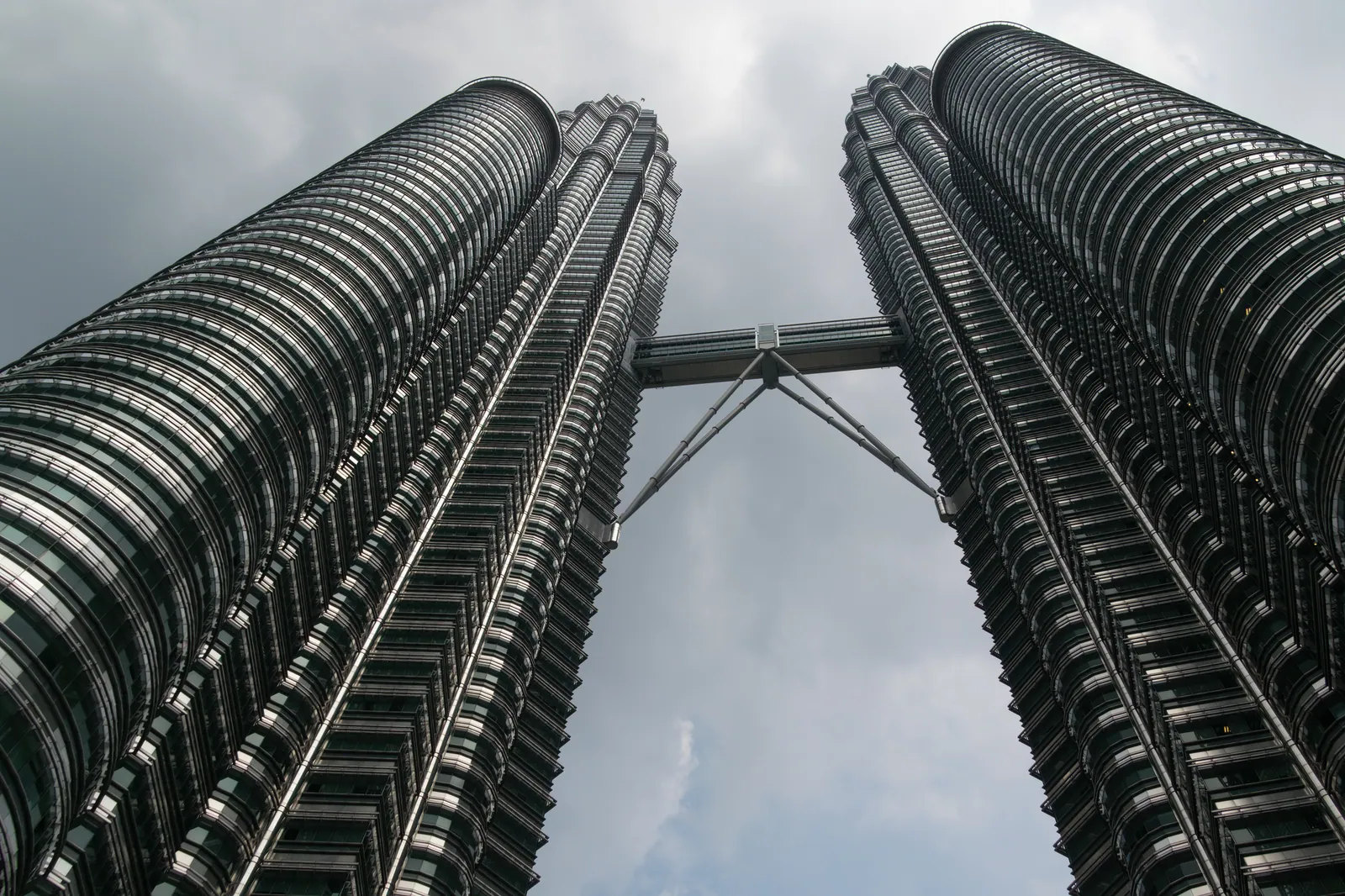
What we would not bother with on a short layover: the Petronas Towers. They sell timed tickets that go early, and the better view is from a rooftop bar looking at them, which is an evening thing rather than a layover thing.
Two nights: the version worth booking
If you are already changing planes at KL on the way to India or Europe, staying two nights costs little or nothing extra on a through fare.
That is the whole argument, and it is a strong one. You get a proper hotel, a shower, a Batu Caves morning, a mamak stall at midnight, and a very long journey broken into two civil ones.
Two days is also close to the right amount of KL. The Batu Caves, the food, the old colonial core around Merdeka Square, the Islamic Arts Museum which is superb and almost empty, and a rooftop at dusk. That is the city, done properly.
Beyond three days you should probably be somewhere else in Malaysia: Penang for the food and shophouses, Langkawi for a beach, or Borneo, which is a different country in every sense that matters.
KL is one of the few big Asian cities where the hotel decision is genuinely easy, because the KLIA Ekspres runs the airport to KL Sentral in about half an hour on a fixed schedule that traffic cannot ruin. Anywhere on or near that line works. Bukit Bintang is the obvious base for a first visit, walkable to the food streets and the malls, and the KLCC end is the quieter, glossier version with the towers outside the window. Chinatown and the old core around Merdeka Square are cheaper and closer to the parts of the city with a memory. For a genuinely short stop, the transit hotels inside and beside the terminal exist and are the right answer under about eight hours. Check Kuala Lumpur hotel rates
One local quirk to plan around: KL rates jump hard around the Formula One weekend, major concerts at Bukit Jalil and the school holidays in Singapore, which empty into KL by road. If your dates are movable by a day, they are worth moving.
Why KL keeps turning up in your search
Worth understanding, because it explains why you are reading this page at all.
Geography. KL sits between Australia and India rather than west of it. Fly Sydney to KL to Chennai and you are pointed at your destination the whole way. Compare that to Dubai or Doha, which sit west of India, so a Gulf routing overshoots and doubles back. Our Qatar Airways page is candid about that.
Price. Malaysia Airlines competes against Singapore Airlines an hour down the road and against the Gulf carriers with their enormous marketing budgets. An airline in that position has one lever and it pulls it.
And the fact almost no Australian knows: Malaysia Airlines is in Oneworld. Your Qantas status works on it, lounge and all, and the flights earn Qantas points and status credits. So the cheapest option on the corridor is frequently also the one where your status works. Our Sydney to Kuala Lumpur page goes through the corridor properly.
The weather is the same every day
There is no season here in any useful sense, which is genuinely convenient for a stopover.
KL sits near the equator. It is hot and humid every day of the year, with rain arriving as an intense afternoon downpour rather than a grey day. March to April and September to November are somewhat wetter, and it matters less than you would think, because the pattern is the same: a hot morning, a dramatic burst of rain, a pleasant evening.
Plan the middle of the day indoors, which is exactly what the whole city does. The practical consequence: you can book a KL stopover on price rather than season, which is a rare and underrated luxury.
Practical bits
Check the terminal. Twice. This is the whole first section and it is the only thing here that can cost you a flight.
Take the train. Both the airport link and the commuter rail work, they are cheap and air-conditioned, and visitors default to ride-hailing and then sit in traffic.
Nothing is walkable and it looks like it should be. The map lies. Distances that appear to be a stroll are a sweaty twenty minutes with no footpath.
English is everywhere, more than in most of the region, which makes this an unusually easy place to improvise.
Alcohol is taxed heavily. It is not a dry country, but a beer costs more than the meal it came with. It is the one thing here that is not cheap.
The arrival card is an online requirement now. Do it before you fly.
The honest summary
Different terminals, separate tickets: that is your layover. Do not leave.
Under six hours: stay airside.
Six to nine, one ticket: the Batu Caves by train, or eat. Both are good.
Two nights on a through fare: close to free, and the best-value stop in the region.
The decision is made at the booking, and specifically at the terminal question, which no comparison site will flag for you. Get a free quote with the stopover priced.