
Best Hotels in Kuala Lumpur - KLCC or Bukit Bintang
Kuala Lumpur has the best-value hotel rooms of any major city in Asia, and a map that lies to you about distance. Book the wrong side of a motorway and you will spend the trip in a car in a city built for cars.
The best value rooms in Asia
Say this plainly, because it changes how you should book.
Kuala Lumpur has the best-value hotel rooms of any major city in South East Asia, by a distance. What a genuinely good room costs here would buy you something distinctly ordinary in Singapore, an hour down the road.
Which produces an unusual recommendation from us: book better than you normally would. In most cities we tell people to spend less on the room and more on the trip. Here the gap between an adequate room and an excellent one is small enough that the excellent one is the sensible purchase, and our Kuala Lumpur travel guide explains why the city is such good value generally.
The rooftop pool is part of that. In most places it is a marketing photograph. Here it is hot and humid every day of the year, the sightseeing is thin after two days, and a good pool at these prices is genuinely part of what you are buying. Ask us about a KL stopover.
The map lies about distance
Now the thing that catches everyone.
Almost nothing in KL is walkable, and the map suggests otherwise.
Distances that appear to be a stroll are a sweaty twenty minutes with no footpath, along a road with no crossing, because the city was built for cars and then apologised for it afterwards.
The apology is the walkway network: covered, air-conditioned elevated walkways connecting parts of the central area, particularly between KLCC and Bukit Bintang. Where it reaches, walking is pleasant. Where it does not, walking is an ordeal.
So whether your hotel connects to the walkway network, or sits near a station, matters more than the star rating. That is the single most useful criterion on this page, and no listing mentions it.
The areas
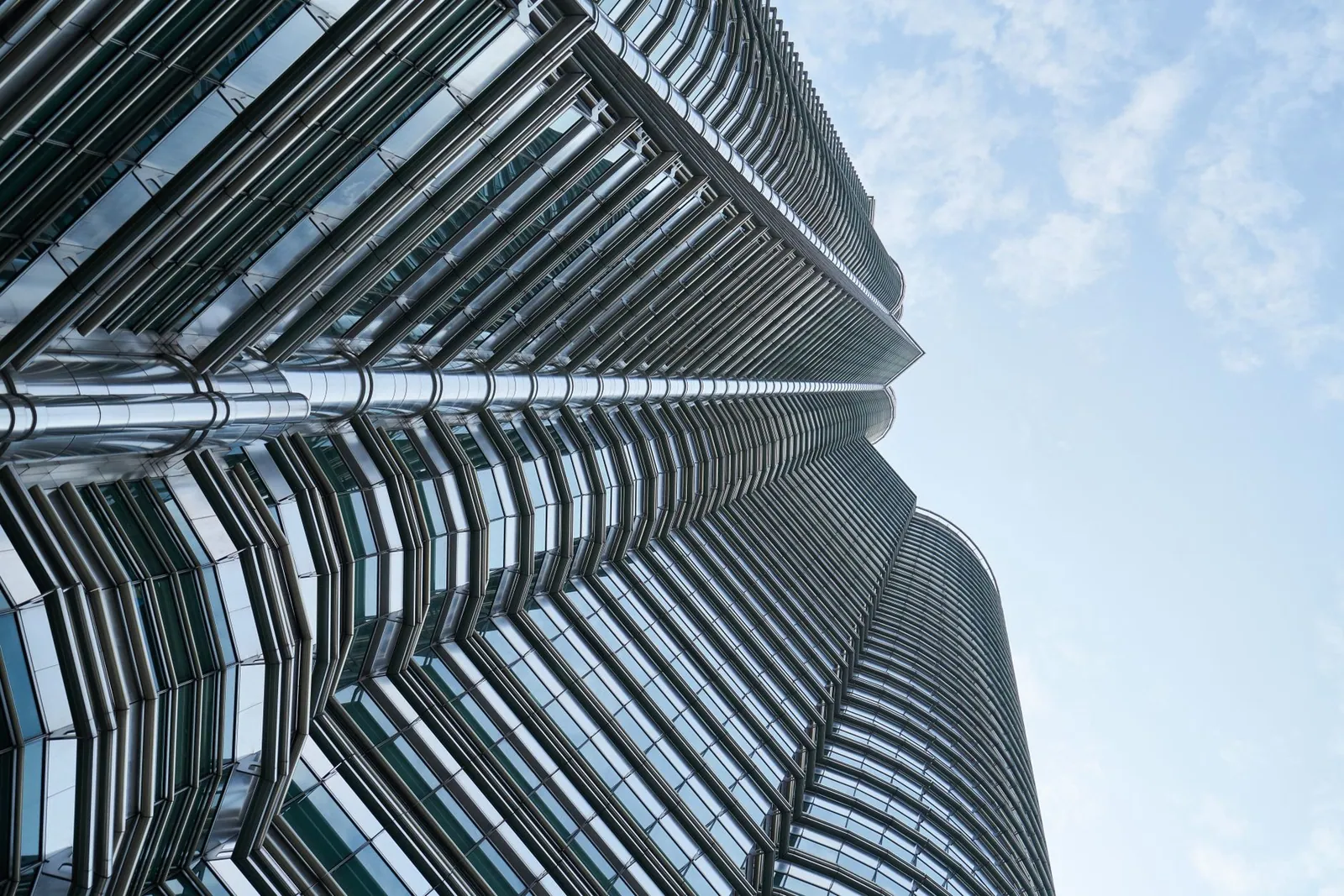
KLCC. The first-visit answer. The towers, the park, the mall, and the walkway network. Comfortable, convenient, and slightly antiseptic.
Bukit Bintang. Food and nightlife within actual walking distance, which is rare here. Busier, scruffier, better fun. It connects to KLCC by walkway, which is why the two are effectively one choice rather than two.
Chinatown and the old core. Cheaper, more interesting, closer to Merdeka Square and the colonial buildings, and a shorter ride to the central station for the Batu Caves.
Bangsar. Where people who live here go. Good food, a ride from the middle, and the right answer on a second visit.
Near the airport. Only if your connection genuinely requires it, and see below.
The airport terminal question
Worth its own section because it costs people.
Kuala Lumpur's airport has two terminals in separate buildings, joined by a train. Full-service carriers generally use the main one; the low-cost carriers largely use the other.
Which means an airport hotel serving one terminal is not necessarily convenient to the other, and travellers book the wrong one.
More to the point: the train into the city takes about half an hour, so an airport hotel is rarely the answer at all. Our Kuala Lumpur layover guide works through the whole terminal problem, and the short version is that if your flights are in different terminals on separate tickets, that transfer is your layover and you are not going anywhere.
Two nights, which is the point
Two nights does KL properly, and that is close to ideal rather than a criticism.
The Batu Caves in the morning by commuter train, which is half an hour and one of the easiest genuinely impressive things near any Asian city. Banana leaf rice in Brickfields. The Islamic Arts Museum, which is superb and almost empty. The colonial core around Merdeka Square. A rooftop at dusk looking at the towers, which is a better view than being inside them. And a mamak stall at midnight.
That is the city.
Which is exactly why KL works so well as a stopover: our Sydney to Kuala Lumpur page explains that most people flying this route are going through rather than to, and if you are already changing planes, two nights costs little or nothing extra on a through fare.
Beyond three days you should probably be somewhere else in Malaysia: Penang for the food and shophouses, Langkawi for a beach, or Borneo, which is a different country in every sense that matters.
No season, which is convenient
There is no real season here in any useful sense.
KL sits near the equator. It is hot and humid every day of the year, with rain arriving as an intense afternoon downpour rather than a grey day. March to April and September to November are somewhat wetter, and it matters less than you would think, because the pattern is the same: hot morning, dramatic burst, pleasant evening.
Rates move with events and holidays rather than weather.
The practical consequence: you can book on price rather than season, which is a rare and underrated luxury. Plan indoor afternoons, which is what the whole city does anyway, and any month works.
The practical notes
Take the train. KL's rail is cheap, air-conditioned and it works. Visitors default to ride-hailing and then sit in traffic and blame the city.
Check the walkway connection, not the address.
English is everywhere, more than in most of the region, which makes improvising easy.
Alcohol is taxed heavily. It is not a dry country, but a beer costs more than the meal it came with. It is the one thing here that is not cheap, and it is worth knowing before you build an evening around a hotel bar.
The arrival card is an online requirement now. Do it before you fly.
Breakfast is rarely worth including. The mamak stall outside is better and costs a fraction.
Check Kuala Lumpur hotel rates
Rates are the best value in the region and they move with events rather than seasons. Get a free Malaysia quote and a consultant will reply within 2 business hours with the flights priced and the stopover version alongside if you are connecting through anyway. Our flights to Malaysia page covers the corridor and the Malaysia Airlines page explains why your Qantas status works on the cheapest option on it.
Booking notes
Prices shown by our partner are live and quoted in Australian dollars from our links, and free cancellation windows are stated on each listing. Our current hotel partner is Agoda, whose Malaysian coverage runs from the KLIA transit hotels through the Bukit Bintang mid-range to the KLCC towers, all in one search. Scores run out of 10 and come only from guests who completed the stay, and eligible bookings earn AgodaCash.